In short
About 10 minutes to read- Research shows the COVID spike protein can switch on mast cells, immune cells in the nose, lungs, skin and gut, and drive ongoing inflammation.
- Spike protein can linger in the body for months or years, which may keep symptoms going, from rashes, congestion and gut trouble to a racing heart, brain fog and poor sleep.
- Antihistamines, mast cell stabilizers, pacing, rest and a care team can help. This post also explains where I think Canada’s guidelines fall short on the biological causes of mental and cognitive symptoms.

“It’s just my allergies, I promise.”
Sound familiar?
Lately that’s all I hear, along with a chorus of coughing, sneezing, and wheezing.
Can’t finish your morning coffee without running to the bathroom? Is the pressure in your nose and eyes driving you crazy? Headache? Ears plugged and sore? Jerk awake at night gasping for air, or just can’t sleep at all? Depressed, anxious, but wired?
It’s the spike protein. Research shows coronavirus spike proteins directly activate mast cells through receptor triggered signaling that drives inflammation.
Here’s what you need to know about COVID, Long COVID, mast cells, and the spike protein.
What Are Mast Cells?
Mast cells are ancient immune defenders stationed in your nose, lungs, skin, and guts, anywhere the outside world meets your body. They are highly specialized sentinel cells, packed with granules that, when activated, rapidly release a cascade of inflammatory mediators into the surrounding tissue. Sometimes this process helps, sometimes it drives harmful, uncontrolled inflammation.
Common triggers include mold, pollen, certain foods, medications, and now, coronavirus spike proteins.
Why Is This Happening?
Mast cells are built to respond to threats. When spike proteins linger in our tissues, or are slow to clear, mast cells stay on high alert.
Multiple peer reviewed studies show SARS-CoV-2 material, especially spike protein, can persist for months or years in human tissues, including the brain’s protective layers, meninges, and skull marrow. This persistence drives chronic inflammation, immune dysregulation, and neurological symptoms. After the virus clears from the lungs, fragments can remain in blood and tissue, particularly among those with ongoing symptoms.
This ‘confuses’ the immune system, keeping mast cells primed and activated long after recovery.
Some research suggests that in certain susceptible individuals, repeated exposure through reinfection, or in rare cases, vaccination, may heighten mast cell activation for months or years.
Physical Symptoms of Mast Cell Activation Syndrome
The physical effects of mast cell activation span nearly every organ system. People with MCAS commonly experience a constellation of symptoms that can fluctuate and change over time, confusing both the patient and physician.
According to CANPCC.CA , symptoms must involve at least two different body symptoms and can include:
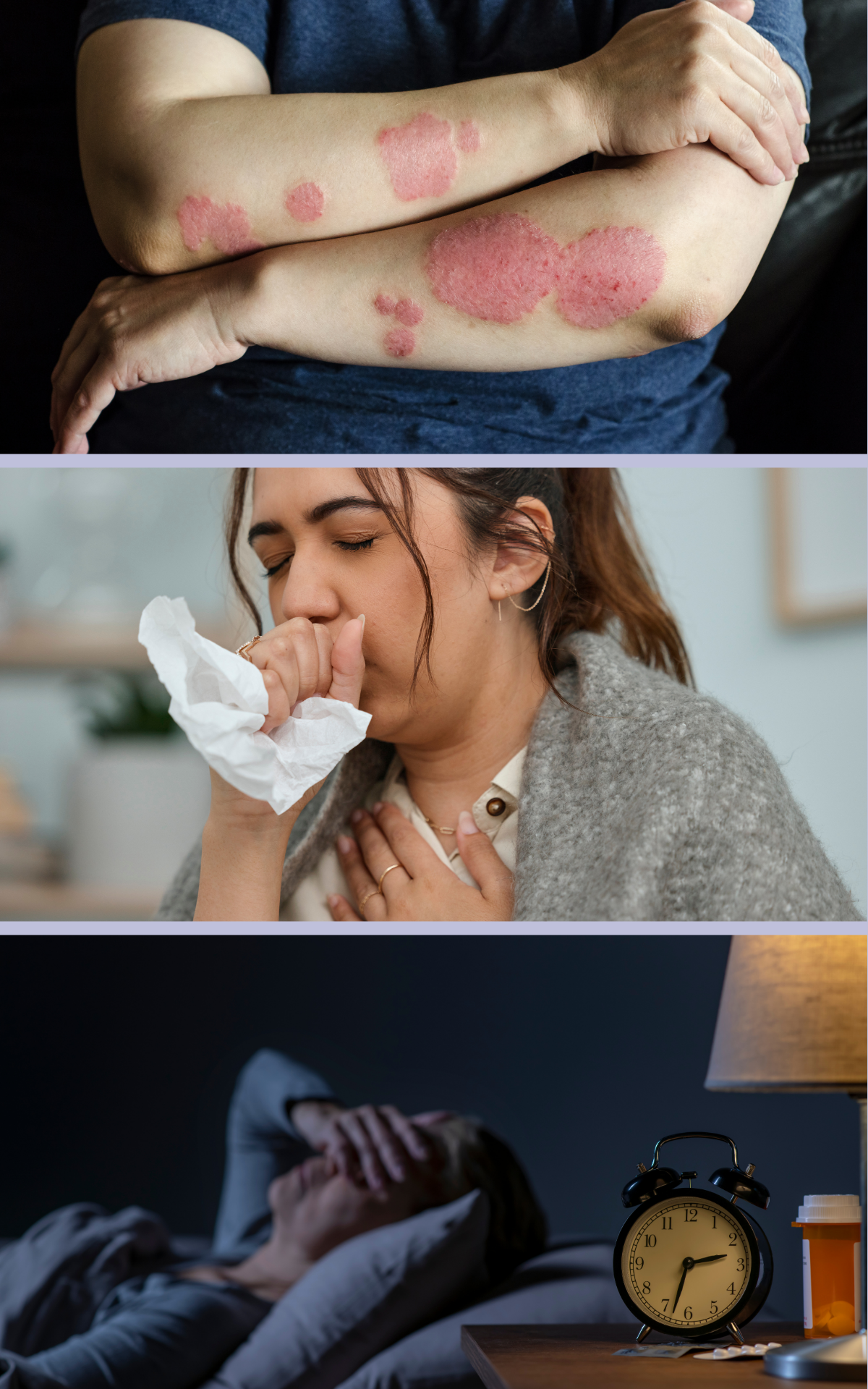
- Skin: flushing, swelling, itching, rashes
- Nose: congestion, pressure, runny nose
- Eyes: redness, pain or irritation
- Ears: tinnitus (ringing in the ears), ear pain, pressure or fullness in the ears
- Head: pressure headaches, migraines, difficulty sleeping/insomnia
- Lungs: cough, difficulty breathing, low oxygen
- Digestive system: nausea, diarrhea, constipation, stomach pain
- Nervous system: fatigue, poor concentration (brain fog), weakness
- Heart and circulation: high heart rate (tachycardia), low blood pressure, dizziness
Skin symptoms can include hives (urticaria) or unexplained rashes, The cardiovascular system is also impacted and can lead to rapid heart rate, palpitations and blood pressure fluctuations.
This heightened inflammatory and prothrombotic state may also dramatically increase your risk for potentially life threatening complications such as heart attacks, strokes and blood clots.
Respiratory symptoms are also common, ranging from persistent coughs that fail to respond to treatment, sinus swelling to pseudo asthmatic episodes and low oxygen saturation.
Musculoskeletal issues may manifest as generalized pain, aches, joint pain, and deep bone discomfort, overlapping the symptoms seen in fibromyalgia and ME/CFS.
Fatigue plays a central and disabling role. It is not just tiredness, but a profound, body wide lack of energy and stamina that fails to improve with sleep.
All these physical symptoms can appear together or in constantly changing combinations, making Long Covid and MCAS a deeply challenging condition to live with.
Psychological and Cognitive Consequences: The Mental Toll
The mental and cognitive impacts of Covid and Long Covid extend far beyond what is typically recognized as infection related.
Mast cells, when abnormally activated by persistent viral fragments, such as the spike protein, gather near the blood brain barrier and within neural tissues, releasing a surge of inflammatory mediators.
These substances can disrupt neurotransmitter function, compromise the integrity of the blood brain barrier and drive neuroinflammation, which interferes with how brain cells communicate and process information.
These symptoms are secondary to being physically unwell, they are rooted in biological changes resulting in memory loss, difficulty concentrating, slowed thinking and reaction time, confusion and trouble processing simple information.
Frequently described as ‘brain fog’ in news outlets and social media, this label minimizes what’s truly happening; ongoing viral persistence with significant brain involvement.
Patients are being misdiagnosed with anxiety or depression when the cause is biological. Studies have established that Long Covid related brain dysfunction persists independently of classic mental health conditions and can be objectively measured months and even years after infection.
This ‘misunderstanding’ can lead to inadequate care, mismanagement, further disability, increased risk of suicide, substance abuse and unnecessary psychological distress for those affected.
Sleep disturbances compound the issue. Restlessness, trouble falling asleep, insomnia and symptoms similar to sleep apnea are all closely linked to night time Mast Cell Activation Syndrome.
A person may feel as if they ‘jerk awake’ gasping for breathe or unable to take a deep breathe (air hunger), this may be accompanied by anxiety or severe panic attack type symptoms and fluctuating oxygen levels.
Over time, without adequate medical validation, support and resources, exhausted and hopeless patients are left with a very poor quality of life.
The neuropsychiatric effects of long covid are not limited to transient or minor symptoms.
One of the most concerning trends is the the increase in neurodegenerative conditions such as Alzheimer’s disease, dementia and aphasia. In Canada, dementia and Alzheimer’s disease have become the most common comorbidities amongst COVID-19 related deaths, accounting for more than a third of fatal cases in some studies.
The mechanisms likely involve direct viral invasion, mast cell driven neuroinflammation, and the resulting damage to neural circuits and the blood brain barrier. These conditions manifest not only as memory loss and personality changes but also in new difficulties with speech and language, a clinical syndrome known as Aphasia.
33 to 35% of COVID-19 survivors received a new neurological or psychiatric diagnosis in the six months following infection, and about 13% were first time diagnoses, including dementia, psychosis, and cognitive impairment.
Markers of neurodegeneration, such as neurofilament light chain and tau proteins (implicated in Alzheimer’s disease), are significantly elevated in people with COVID-19 and are especially pronounced among those who experience neurological symptoms during infection.
International experts at the Alzheimer’s Association International Conference warn that the long term effects of COVID-19 may contribute substantially to an impending spike in dementia cases worldwide.
Additionally, epidemiological data from Public Health Canada confirm that neuropsychiatric symptoms such as, fatigue, memory loss, confusion, and even psychosis, persist at high rates among Canadians with Long Covid, with about 24% experiencing severe limitations in daily function due to these symptoms, and nearly 40% reporting difficulties accessing care for them
Among survivors, data show increased risk and new diagnosis of dementia, psychoses and cognitive impairments in the months and years following Covid-19.
Accurate diagnosis and open acknowledgment of these underlying mechanisms are critical for providing effective care, preventing psychiatric mislabeling, and addressing the growing burden of neuropsychiatric disease across the country.
Canada’s Stance on Long Covid and Mast Cell Activation
What They Got Right
The Canadian Post COVID-19 Condition Guidelines (CANPCC) recognize Long Covid as a complex, multisystemic condition that can persist for months or years after the initial infection.
The Guideline platform affirms that ongoing inflammation, neuroimmune interactions, and destabilization of regulatory immune cells contribute to long COVID, and emphasizes the importance of personalized management plans that may include antihistamines, mast cell stabilizers, and multidisciplinary care for symptomatic relief.
CAN-PCC Mast Cell Activation Guidelines and Recommendations
What They Got Wrong
CANPCC guidelines fall short on managing mental health and neuropsychiatric symptoms in Long Covid as they primarily focus on conventional psychiatric approaches, including screening for mood and anxiety disorders and recommending cognitive rehabilitation, psychotherapy, exercise and sleep hygiene for symptoms like brain fog, fatigue and depression.
This directly contradicts and diverges from the biological understanding of Long Covid, Mast Cell Activation and viral persistence.
As a result, the real causes of persistence are mainly psychologized and are framed as adjustment or stress disorders rather than the clear evidence of underlying viral persistence and brain injury.
Ignoring the biological drivers, neuroinflammation, immune dysfunction, and MCAS, that contributes to anxiety, depression, cognitive impairment, aphasia, dementia and other neuropsychiatric syndromes in the aftermath of covid increases the risk of further disability, compounds social issues such as housing and accessing disability supports, increases risk of overdose, suicide, heart attacks and stroke.
Repeated covid infections are now proven to increase Long Covid risk, even in children. Large scale studies show the odds nearly doubled after a second infection.
Yet in Alberta and across Canada, public health policies have stripped away Covid protections and prevention measures, restricted access to testing and vaccination, ignoring the biological and neurological risks of repeat exposure to infection.
Frontline workers, including those in healthcare, education, policing, and the unhoused, also face a disproportionately high burden of repeated infection, with minimal policy protection or targeted biological interventions that address the root of long COVID, MCAS, or neuroimmune after effects.
What You Need To Know
Managing Long COVID and MCAS means calming immune overactivation and supporting recovery.
Pharmacological options:
- Antihistamines: cetirizine, loratadine, famotidine (often at higher doses)
- Mast cell stabilizers: cromolyn sodium, ketotifen, quercetin, luteolin
Nonpharmacological options:
- Low histamine or anti inflammatory diet
- Supplements like vitamins C and D
- Stress management, avoiding heat or strong odors
- Prioritizing pacing, rest and sleep
- Counseling and support groups for emotional resilience
Effective care often requires a multidisciplinary team, primary physicians, immunologists, neurologists, gastroenterologists, and mental health professionals.
Some Canadian based resources for MCAS can be found here:
International Resources:
https://www.mastcellaction.org/resources
https://allergyasthmanetwork.org/news/mast-cell-disease-toolkit/
Many Canadians living with Long Covid are still told it’s “all in their heads.”
When basic tests come back normal, physicians who are unfamiliar with the complexities of Long Covid and MCAS may attribute your symptoms to stress or anxiety.
They may encourage patients to push through fatigue and ‘brain fog.’ You might force yourself to go to work, to keep exercising, to keep up appearances and your normal routine.
But forcing your body beyond its limits only increases Mast Cell Activation, worsening inflammation and vascular and neurological burden.
Maybe you’ve been checking your apple watch more closely, watching the numbers climb as you push yourself throughout the day.
Or you can’t keep exercising the same as you used to, becoming winded early or even experiencing allergic or anaphylactic reactions after physical activities, drinking alcohol, certain medications or recreational substances, or a reaction to a vaccine.
These crashes aren’t in your mind, they are biological. This overexertion and inflammation raises your risk of heart attack, stroke, respiratory distress and neuropsychiatric disorders.
And yet, when you return to your doctor, they may still say nothing is wrong.
This is Covid. This is Long Covid. It’s not your allergies.
Persistent infection and immune activation demand caution, not denial.
The science is clear, even when the healthcare system hasn’t caught up yet.
Rest, pace yourself, and keep advocating, for yourself and for others.

Sources and References
Mast Cell Activation by Spike Protein
- Zhang et al. (2025). “Spike proteins of coronaviruses activate mast cells for degranulation via stimulating Src/PI3K/AKT/Ca²⁺ intracellular signaling cascade.” Signal Transduction and Targeted Therapy. https://pmc.ncbi.nlm.nih.gov/articles/PMC12090780/
- Tsilioni & Theoharides (2023). “Recombinant SARS-CoV-2 Spike Protein Stimulates Secretion of Chymase, Tryptase, and IL-1β from Human Mast Cells.” International Journal of Molecular Sciences. DOI: 10.3390/ijms24119487 https://www.ncbi.nlm.nih.gov/pmc/articles/PMC10253625/
- Theoharides & Kalogeromitros (2023). “Role of SARS-CoV-2 Spike-Protein-Induced Activation of Microglia and Mast Cells in the Pathogenesis of Neuro-COVID.” Cells. https://www.mdpi.com/2073-4409/12/5/688
- Wu et al. (2024). “Mast cell activation triggered by SARS-CoV-2 causes inflammation in brain microvascular endothelial cells and microglia.” PMC. https://pmc.ncbi.nlm.nih.gov/articles/PMC11024283/
Spike Protein Persistence in Tissues
- Peluso et al. (2022). “SARS-CoV-2 and viral persistence in blood and tissue.” PubMed / Nature Communications. https://pubmed.ncbi.nlm.nih.gov/36697674/
- Rong, Mai, Ebert, Kapoor et al. (2024). “Persistence of spike protein at the skull-meninges-brain axis may contribute to the neurological sequelae of COVID-19.” Cell Host & Microbe. DOI: 10.1016/j.chom.2024.11.007 https://www.cell.com/cell-host-microbe/fulltext/S1931-3128(24)00438-4
- (Retained from original article) Nature (2022). Dysregulation of brain and choroid plexus cell types in severe COVID-19. https://www.nature.com/articles/s41586-022-05542-y
- Guo et al. (2025). “SARS-CoV-2 Spike Protein and Long COVID: Part 1: Impact on Pathophysiological Mechanisms.” PMC. https://pmc.ncbi.nlm.nih.gov/articles/PMC12115690/
Vaccination and Mast Cell Activation in Susceptible Individuals
- Kounis et al. (2024). “Mast cell activation and hypersensitivity reactions following COVID-19 vaccination.” PubMed. https://pubmed.ncbi.nlm.nih.gov/38693735/
MCAS Diagnosis: Canadian Authoritative Source
- Picard M. et al. (2025). “Diagnosis and management of mast cell activation syndrome (MCAS) in Canada: a practical approach.” Allergy, Asthma & Clinical Immunology. University of Toronto & Université de Montréal. DOI: 10.1186/s13223-025-00998-9 https://pubmed.ncbi.nlm.nih.gov/41272881/ Full text: https://pmc.ncbi.nlm.nih.gov/articles/PMC12639879/
MCAS and Long COVID
- Arun, Storan & Myers (2022). “Immunological dysfunction and mast cell activation syndrome in long COVID.” PubMed. https://pubmed.ncbi.nlm.nih.gov/37389095/
- Kempuraj et al. (2024). “COVID-19 and Long COVID: Disruption of the Neurovascular Unit, Blood-Brain Barrier, and Tight Junctions.” The Neuroscientist. DOI: 10.1177/10738584231194927 https://pubmed.ncbi.nlm.nih.gov/37694571/
Blood-Brain Barrier and Brain Fog
- Greene et al. (2024). “Blood-brain barrier disruption and sustained systemic inflammation in individuals with long COVID-associated cognitive impairment.” Nature Neuroscience. https://www.nature.com/articles/s41593-024-01576-9
Neurological and Psychiatric Diagnoses After COVID
- Taquet M., Geddes J.R., Husain M., Luciano S., Harrison P.J. (2021). “6-month neurological and psychiatric outcomes in 236,379 survivors of COVID-19: a retrospective cohort study using electronic health records.” The Lancet Psychiatry. 8:416-427. DOI: 10.1016/S2215-0366(21)00084-5 https://www.thelancet.com/journals/lanpsy/article/PIIS2215-0366(21)00084-5/fulltext PMC full text: https://www.ncbi.nlm.nih.gov/pmc/articles/PMC8023694/
Canadian Public Health Data
- Public Health Agency of Canada / Health Infobase. “Post-COVID Condition: Neuropsychiatric Symptoms in Canada.” https://health-infobase.canada.ca/datalab/post-covid-condition-neuropsychiatric-symptoms.html
Reinfection and Long COVID Risk
- Chen Y. et al. (2025). “SARS-CoV-2 reinfection and risk of post-acute sequelae of COVID-19 in children and adolescents.” The Lancet Infectious Diseases. NIH RECOVER Initiative. https://www.pennmedicine.org/news/second-infection-in-kids-doubles-long-covid-risk
Canadian Long COVID Guidelines
- Canadian Guidelines for Post COVID-19 Condition (CAN-PCC). McMaster University / Cochrane Canada / Public Health Agency of Canada. https://canpcc.ca MCAS specific page: https://can-pcc.recmap.org/plr/577c3aab-cefb-41bd-9f56-6dafa7374ec9